Friday, April 27, 2012

The First Thirty


A reminder that my more current blog is at http://marionjensen.com. Posts here come several weeks later.
------------------------------
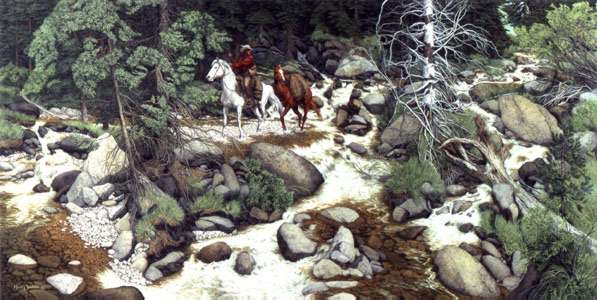
I went on a hike up Farmington Canyon. I've posted a few of the pictures here.
As soon I as I was out of the car, the voices started up in my head. You've probably heard them before. They whisper things like:
It's too cold.
You're not prepared. You don't have the right clothing.
The snow is too deep.
It's too far to the summit.
These voices have the most power the first thirty minutes of a hike. The voices will tell you it's not really giving up if you've only just started. And since you've only invested a small portion of your time and energy, turning around is easy to do.
Sometimes the voices may speak truth. Perhaps you are not fully prepared. Perhaps the way is too difficult.
But mostly the voices lie. And in the first thirty minutes, you are the most vulnerable.
Once I've left my car far behind, and the valley is spread out in my view, I find I can talk back to the voices.
The summit is still too far.
Then I will go as far as I can.
The snow is getting deeper.
I've walked through worse.
You cannot do this.
Yes. I can.
If I make it past the first thirty minutes, I can usually make it to my goal. I see through the voices' lies, I've invested significant time and energy, and I plow my way to the top.
I've discovered a similar truth in writing. When you begin a new story, the voices are quick to speak up.
These characters are bland.
The plot is thin.
You'll never get to eighty thousand words.
Again, most of the time the voices lie. But it's easy to stop when you've just begun. It's easy to tell yourself that the story isn't as compelling as you first thought. You haven't invested the time, so it's easy to close the document and move on to something else.
Don't believe the voices.
Lower your shoulders, pick a good pace, and plunge ahead. Write the first thirty pages. Ignore the voices and just move forward. Perhaps on page thirty-one, you can start to respond to those nagging doubts.
The characters are weak.
I'm getting to know them.
You'll never reach eighty thousand words.
Maybe not, but tonight I'll reach three thousand.
The plot is thin.
I can do this.
Ignore the voices until you've written thirty pages. Invest the time and effort that your story both deserves and demands. You'll find the next two hundred pages will very likely come.
One last thing. When hiking, I've found that at the base of the trail there are dozens of footsteps. The farther you go, the thinner the tracks. One by one, those who have gone before turn around and head back. Eventually, there is an exhilarating moment when you see the last set of tracks come to an end. You look to the trail ahead and see nothing but unbroken snow.
In writing, it's not good to compare yourself to others. There are far too many variables. But sometimes I like to compare what I'm doing now with what I've done in the past. Maybe first the goal is to just finish a short story. Then it's to writing something longer. Maybe you want to place in a contest, and then come in first. Then the goal may be as lofty as finishing a novel, submitting it, and getting good feedback. Then that happy day comes when you sign a contract, and see one of your books on the shelf.
If you ignore the voices, sometimes you can go farther than you ever thought possible. All you have to do is tackle the first thirty.

Tuesday, January 17, 2012

Unstoppable

Original post here.

Sometime in my childhood, someone introduced me to the paradox of the unstoppable force and the immovable object. I spent months and months trying to resolve this problem.

In my young mind I pictured the immovable object as an anvil in space. The unstoppable force as a hammer flying toward it. I went over and over the conundrum in my mind. What would happen when the two met? How could one be unstoppable, and the other immovable? It just doesn’t work! My tiny little brain couldn’t comprehend it.

And then it could. At some point I developed a solution. I came to understand that you couldn’t have both an immovable object and an unstoppable force existing at the same time.

Here is the first beautiful truth: When an unstoppable force meets an immovable object, only one of them emerges with their name intact.

In college, my very first English professor announced to the class that you couldn’t make a living at creative writing. It was practical advice, stated simply. He spoke from years of experience. Here was an immovable object. A universal truth.

Only it wasn't.

I stopped writing for ten years. I graduated with two degrees in different subjects. But somewhere deep inside, the author would not be still. He would not be silent.

And so I wrote. And wrote. And wrote some more. I experienced pain that only other artists truly understand.

I have two books in print. I have an amazing agent working with me on a third book. I do not support myself with my writing. I do not know if the force I have built up is enough to break this personal immovable object. It may not be. The professor may have been right . . . for now.

Here is the second beautiful truth: You can always try again.

When the unstoppable force is stopped, it proves nothing. There is a spark in each of us—a spark that makes us human. Sometimes that spark is buried deep. Sometimes we’re not sure it’s there at all. But it is. And that spark demands that we try again. And again. And again.

The spark does not demand that we succeed. Only that we try.

Here is the third truth: Sometimes we succeed.

And that is the most beautiful truth of all. Blood. Sweat. Tears. Piles and piles of practice and work. In the end you just might reveal the immovable object for what it is—a fraud.

We try, we try, we try again. And in the end, when the dust has settled, we will see ourselves for what we really are.

Unstoppable.

Tuesday, January 10, 2012

Moving . . .

I've somehow managed to snatch marionjensen.com away from the millions of other Marion Jensens (all of whom are 80 year old women), and I've started blogging there. I will continue to post here, but it will usually be a few days late and several dollers short. So if you want the latest and greatest, please subscribe to my new blog at http://marionjensen.com

See you over at the new shiny!

Tuesday, January 03, 2012

Breaking Bad

I was talking with a few friends on Twitter about Breaking Bad. I ended up disagreeing with a couple of them, and promised to write a blog post about my opinions. It's not that I think I'm right and everybody else is wrong. It's that I'm right, and everybody else just hasn't realized it yet.

Okay, only joking. But I do have some strong opinions on the subject. Stephen King says it's the best writing on TV, and I agree.

The first episode starts out with a middle age man--Walt--recording himself on a video camera. He's emotional, almost sobbing. He tells his family how much he loves them. He is standing in the middle of the desert, and he's not wearing any pants.

This isn't just a clever place to start to show. It's the only place to start the show. Walt comes across as a man who is suffering. A man who had done something bad, but he's done it for his family. For somebody else. You feel pity for Walt. Empathy. And that's good, because we're about to see what led Walt to this scene, and it's not pretty. Walt has done some reprehensible things.

One friend on Twitter said that Breaking Bad was a show about bad people doing bad things with no consequences. I argue it's about good people doing bad things, and the consequences come just as the do in real life--slowly. Better yet, we get to understand why these good people are doing bad things. To me, that's just one of the things that makes the show so fascinating.

Another brilliant aspect of the show is the dynamics between Walter White, the middle age chemistry teacher, and Jessie Pinkman, the drug-dealing meth addict. We see episodes where Walt rubs off on Jessie in a positive way. He serves as a mentor of sorts, pushing Jessie to be a better person. We hold out hope that these two suffering souls can pull each other up.

But it's not to be. There are other episodes where what Walt chooses to do is so horrible that even Jessie can't go along with it. Roles are reversed, and Jessie becomes the conscience of the group.

The conflict and decisions throughout the show are painful and beautiful.

There is probably an entire semester's worth of writing lessons in Breaking Bad. The characters are both complex and real. The writing and pacing is tight. And the acting is nothing short of brilliant.

I will admit, Breaking Bad may not be for everybody. It peels back the layers of human nature, and takes a stark look at all that is bad about us. But it also takes just as bold a look at what is the best in all of us. An example of this is a scene that I can't describe without giving it away. It's at the end of season three, and it's the part where Walt looks at Jessie and says, "Run."

That scene is brilliant, and exemplifies all that is good about Breaking Bad.

I don't expect a happy ending with the show. I'll be disappointed if we get one. Breaking Bad is about choices and consequences. It's reminder of the very short distance between good and evil. A few wrong choices, a few bad actions, and we too can break bad. We'll steer off course and cross that very fine line between human and monster.

Sunday, January 01, 2012

Tackling 2012

Happy New Year!

Usually I write my New Year's resolutions in December. I just write down the things I did the previous 12 months, and then feel pretty darn good about myself. But this year I actually have a few goals, and thought, what the heck. I'll write them down on the blog where I can't misplace them. This is more for me than for you, but please feel free to mock me at the end of the year when I once again ACCOMPLISH NOTHING.

Writing

I'm about 12,000 words into a speculative fiction novel called Monster. I'm having loads of fun with it. I've also got Almost Super 2 completely outlined. I'm going to keep working on Monster unless circumstances call for Almost Super 2 to be written first. Either way, I need to finish another book. Sometimes it seems daunting, but in 2012, I need to write more.

I thought about declaring selling Almost Super was my goal, but that goal is largely in the capable hands of my agent, Sara Crowe. So for me, I'll stick to what I can control. And what I can control is writing.

Finally, this year I wrote a short story. It's on a topic about which I feel very strong. I'd like to get it published sometime in 2012.

Goal: Complete a book
Goal: Get short story published 


Running

I always wondered if  running might become one of those things I do for a while, and then drop. But the more I get into it, the more I really enjoy it. I just discovered the joy of trail running, and Google maps shows me that I've got miles and miles of trail just begging to be discovered less than three miles from my house. Even better, there is a three mile trail that can take me from my house to those other awesome trails.

Goal: Run a 5k in under 24 minutes
Goal: Run a half marathon in under 2 hours

Neither of those times are impressive. In fact, they probably look a little pathetic. But that's what I'm going to shoot for. I'm planning on running three half marathons this year, and then as many 5 ks as I can practically do. If any of you are running anything along the Wasatch front, let me know. It's always fun to suffer with others.

Gardening

I'll admit it. I can't garden to save my life. But we have a very large garden spot, and we need to get more than just carrots and pumpkins out of it. So this year I'm hoping to have a productive garden. I've decided that rather than trying to produce a whole bunch of stuff that we never end up eating, I'm going to focus on a few things that we do eat. I plan on planting a huge raspberry patch, strawberries, tomatoes, and maybe some yams.

If that doesn't work, we're fencing the whole garden and raising hogs. Because who doesn't want more bacon, am I right?

Goal: Have a garden that doesn't suck.

There you have it. I'll try to remember to check these off when/if I complete them. And if I haven't completed them all by the end of 2012, you are free to publicly humiliate me. Also, bring me zucchini. Because I love zucchini, but can never seem to grow it.

Sunday, December 11, 2011

Above the Inversion

Six weeks ago, I went on a hike. The summer had passed too quickly, and I wanted to get outdoors. I had such a fun time I went out the next week. And the next. And the next. So today, even though it was a bit on the cold side, I headed up once more.

I've always wanted to hike to Flag Rock above Farmington. But although Farmington has some great trails, I can't ever seem to find any trail heads. I always feel like I'm sneaking through somebody's backyard to get into the hills. Today, with the help of Google Maps, I found a place where I could hop a fence and get to my goal.

Here in Utah we've had an inversion for several days. It comes with the season. I don't know exactly how it works, but the long and short of it is the weather causes all of the pollutants to be trapped close to the ground. It's not fun to breathe. Today I hiked high enough to get above all the gunk. Here are a few pictures.


You can see the difference when the camera is pointed skyward.


The Flag Rock trail was a pretty good climb. I couldn't talk any of the boys with  going with me, but perhaps now that they've seen the pictures they'll come along. There's always next week.

If you'd like to see more of the pics from the hike, you can see them here.

Friday, November 25, 2011

New Writing/Running Songs

I'm always looking for new songs to run and write to. I find if I find a song works well for one activity, it usually works well for the other. Here are a few recent additions to my play list. I should note that I'm usually just listening to the song, not watching the video. Although I must admit, the video to this first one is pretty nifty.

Lonely Boy - Black Keys


This song has been getting a lot of radio time, but so far I haven't grown weary of it. The song itself is upbeat, while the lyrics tend to be quite dark.

Pumped Up Kicks - Foster the People


And this song just demands that you crank up the volume, if only a little. The music video is not the official one. Somebody mashed up the song with scenes from the 1998 film, Pi.

Super Bon Bon - Soul Coughing


And finally, I'm really liking Neon Trees. They've got several songs I've added to my list, but for some reason, this one does it for me.

Animal - Neon Trees

Sunday, November 13, 2011

The Devil in the Details

It seems like I get a hankering to get outdoors right as it's getting to cold to actually go outside. But this evening I decided it was warm enough to hike part way up the mountain and try to get a few pictures of the sunset. Sunsets are hit and miss, and since I'm not really a good photographer, I tend to miss, even when the sunset is a hit. Tonight, this is what I got.


Not bad, but nothing to scream about. It's a sunset. It's the sun. It's setting. Nifty.

I took a dozen or so of these. It was pretty simple. Just point the camera and click. They all looked fine. As I walked along the trail, I noticed some withered flowers. I got the idea to take a picture of them, up close. It was a little more difficult. I had to take off my backpack, sit or lie in the mud, and get the focus just right. I took a few pictures of the flowers, and put the sunset in the background. The result was a little different.


Again, I'm no photographer, but when I got back and threw all the photos on my computer, it was these pictures that caught my eye.

It got me thinking about writing (because lately writing is all I can seem to think about). There are a lot of cool stories out there. Epic stories. Stories with powerful messages. But what makes a story grand? It's not the big picture. It's the little ones. The details.

Consider J.R.R. Tolkien's epic masterpiece. It's a story of good, evil, courage, sacrifice, and everything in between. But how does it start? With tiny details. Small, but important.

In a hole in the ground there lived a hobbit. Not a nasty, dirty, wet hole, filled with the ends of worms and an oozy smell, nor yet a dry, bare, sandy hole with nothing in it to sit down on or to eat: it was a hobbit-hole, and that means comfort.


I can sense a world there. Tolkien doesn't paint a large picture. He paints a small one. With small details. But from those details we get swept along on an epic journey. One that is made up of small details.

Consider the first line of Michael Crichton's novel The Great Train Robbery:

Forty minutes out of London, passing through the rolling green fields and cherry orchards of Kent, the morning train of the South Eastern Railway attained its maximum speed of fifty-four miles and hour.


Nothing but details. But they hint at another world. A deep and rich world, one that the author has researched or imagined in great detail. I find myself wanting to read more of that world.

Sometimes in writers circles this focus on detail is described as "show, don't tell. I don't want the author to tell me the diner is a dump. I want to taste the flat Coke. I want to feel the sticky syrup on the faded plastic menus. I want to hear the flies buzzing every time the kitchen door opens. When I see the details, I get lost in the world.

I feel like story ideas are a dime a dozen. Anybody can imagine an epic journey, a wild adventure, or star-crossed lovers. But the devil is in the details. To write a good story, you must become intimate with the world you are trying to create. You must create dozens of scenes, filled with rich, vivid details.

The big picture is good, but the details are vital.

Saturday, November 05, 2011

Snow Canyon Half Marathon

Two months ago I watched my wife finish the Top of Utah Half marathon. I was sidelined with some medical issues and hadn't run in almost a year. But watching her finish made me want to get training again. We signed up for the Snow Canyon Half marathon, and I started to run.

Today was the big day. Last night we traveled down to St. George, sat in the hot tub while a freezing rain pelted the tops of our head, and went to bed hoping that it would be warmer by the start of the race.

Race day came early. Doesn't it always? I want to find a race that starts at 2:00 in the afternoon--so I can sleep in.

We rode the bus to the starting line. The rain from last night had cleared, but there was snow on the ground. SNOW ON THE GROUND. Seriously? This is St. George. I thought it was in their city charter that they can only have sun. I stepped off the bus and pretty much felt like this.


Only colder. Much colder. I walked around, beating my shoulders, and stamping the ground with my feet, trying to regain the feeling in my legs and arms. At 8:30, the race began.

I had a jacket and gloves on. As soon as I began running, and as soon as the sun hit me, I went from feeling cold to feeling like this:


That's right. I'm a sissy. It was cold the whole race. But not an uncomfortable cold. In fact, all jesting aside, I think it was just about perfect. Running kept me warm, and the frigid breeze kept me cool. It was fantastic. And as far as the scenery . . . I can't think of a more beautiful run than Snow Canyon. If you drive through Snow Canyon, this is what you'd see:

And if you were to bike through Snow Canyon, you might see this:


And if you're me, and you're running through Snow Canyon, this is what you see:


That, and a pair of shoes hitting the pavement about a million times.

I've been having leg problems for about two weeks, but while my leg bothered me the whole race, I never had to stop. In fact, I felt pretty good. I think I slowed down a little toward the end, but for the most part I was pretty consistent. I don't have a watch, so I can't be certain.

I've only run in one other half-marathon, and I beat my previous time. So all in all I'm pretty pleased. It's by no means an impressive time. In fact, they were already starting to hand out the awards by the time I finished.

My time was 2:08:42 (I'm particularly pleased with the 42). That is an average of 9:49 per mile. I never would have guessed I could run sub 10 minute miles for that long.

The only downside to that time is that it's so close to 2 hours, now I've got to try to break the 2 hour barrier. I guess that will be the goal for the Ogden Half next spring.

I didn't bring a camera, so I don't have a shot at me at the end of the race. I more or less looked like this.


Okay, okay. Maybe more like this:


And now . . . nap time.

Thursday, November 03, 2011

The Distance

At some point in our lives we all set goals. And then after we set out after those goals, we wonder if we can achieve them.

I'm a fan of the band Cake. They've got a distinct style, and one that grows on me over time. They have a song call The Distance, and I find the lyrics beautifully capture the spirit of striving for a goal.

The song starts by describing a race.


Reluctantly crouched at the starting line,
engines pumping and thumping in time.
the green light flashes, the flags go up.
churning and burning, they yearn for the cup.
they deftly maneuver and muscle for rank,
fuel burning fast on an empty tank.
reckless and wild, they pour through the turns.
their prowess is potent and secretly stern.
as they speed through the finish, the flags go down.
the fans get up and they get out of town.

So the race is over. There is a winner, but we don't know who it is. In this song, that's not important. Turn back to the arena to see the real message.


the arena is empty except for one man,
still driving and striving as fast as he can.
the sun has gone down and the moon has come up,
and long ago somebody left with the cup.
but he's driving and striving and hugging the turns.
and thinking of someone for whom he still burns.

The race is over. The man has lost, and yet still he drives on. We come to the chorus.


he's going the distance.
he's going for speed.
she's all alone
all alone in her time of need.
because he's racing and pacing and plotting the course,
he's fighting and biting and riding on his horse,
he's going the distance.

Winning isn't the important thing. By the end of the song we don't even know if this man finishes the race. Again, that's not important. What is important is the first line and the last line. He's going the distance. Going the distance doesn't mean that he's reached the goal--only that he's still working at it.

I love the second verse. It speaks to the doubt we all experience.


no trophy, no flowers, no flashbulbs, no wine,
he's haunted by something he cannot define.
bowel-shaking earthquakes of doubt and remorse,
assail him, impale him with monster-truck force.
in his mind, he's still driving, still making the grade.
she's hoping in time that her memories will fade.
cause he's racing and pacing and plotting the course,
he's fighting and biting and riding on his horse.
the sun has gone down and the moon has come up,
and long ago somebody left with the cup.
but he's striving and driving and hugging the turns.
and thinking of someone for whom he still burns.

We all set goals. Then we strive for those goals. Some goals are realized. Others seem to always be just beyond our reach. So, do we stop reaching, or do we go the distance?

You can listen to the song here.

Saturday, October 08, 2011

Runners and Writers

Runners are mad. I spent most of my adult life believing this. People step out of their houses. They run. And then they stop.

Madness.

My wife started running when I was 36. She pulled me into the sport and I discovered that my assessment was correct—runners are mad. But it's a wonderful kind of madness.

Runners run in the dark. In the rain. In the snow. They run until common sense and every muscle screams at them to stop. And then they run some more. They run barefoot. They run up mountains. They race ten miles when the only things waiting for them at the end are sweaty clothes and some chocolate milk.

Writers are also mad. They write deep into the night. On short lunch breaks. They jot down notes on the bus. They talk to themselves. They endure endless amounts of criticism and rejection. They write for years when the only thing waiting for them at the end are a million words—most of them unread by the world.

Madness.

I ran the Top of Utah Half Marathon last year. I trained all summer. I paid $100 for shoes, and another $50 for the privilege of entering the race. At the end of the 13 miles I got a key chain. I didn't care. I wasn't running for the prize at the end.

I've spent four years on a manuscript. I don't know where it's going to end up. I might get a contract. I might get nothing. But I didn't write it for the prize at the end.

Runners are mad. Writers are mad. But it's a delicious madness.

I love a good midnight run. Or a thorough sloshing through the rain. I will never forget a midnight run through the streets of Logan during a thunderstorm. These events remind me that I am alive. They remind me of what I can do.

I love when my characters surprise me. When the words flow, and I feel like I'm creating another world. When somebody reads a line that I wrote, and bursts into laughter. I will never forget the time a stranger approached me and told me of the time he had to pull his car to the side of the road because he couldn't see through the tears of laughter as he listened to my book.

Runners are mad. Writers are mad.

And that is why I run. And that is why I write.

Friday, September 23, 2011

Crossing the Streams

I've started a new story. It's one I've been kicking around for about two years, and so far I'm still pretty excited about the project.

I've been trying to get to know my protagonist. For some this may be an easy thing, but I find it difficult. I have to really think about it. For months. I imagine what he would do in different situations. What he would say. I try to get deep inside his head.

This has proven to be a problem. You see, I'm trying to do the same thing for Juror # 11 (I know, yet ANOTHER post about the play). And quite frankly the two characters are very different. So I find myself in the play wanting to react like the character in my story. That doesn't work, because the character in the story would probably start beating on a few of the other jurors.

However, it's a good exercise for me. If I can't keep more than a single character in my head at once, I'm going to have a hard time writing novels. Unless the novel is about the sole survivor of the human race. Or a hermit. Maybe I should write a book about the Unabomber.


Opening night it tonight. We'll see which character shows up for the play.

Thursday, September 22, 2011


Those who follow me on Twitter have heard a lot about the play I’m in. I promise I’m not going to harp on it forever, but I thought I’d mention one more thing that I find interesting about plays—from a writer’s perspective.

The character I play is a foreigner. There is a brief paragraph in the front of the script about what my character is like. But when you look at the actual script itself, there is very little direction as to how I deliver my lines.

Scripts are interesting beasts. You don’t have the luxury you do with books to use phrases like “his eyes smoldered” or “his voice was cold”. All I have are the lines. I don’t even know if I’m supposed to stand up, sit down, slam my fist on the table, or cry. The dialogue has to convey all of the emotion.

By the time the play opens, we’ll have run the play close to 20 times. There are lines of dialogue that didn’t make sense when we first went through the play. I read the line and wondered why it was in there. It didn’t make sense. But the more I performed the lines, and the more I got into the head of my character, the more the lines make sense. I came to the very pleasant and surprising conclusion that the author of this play very likely pored over every single line of the play. It feels almost like one of those Bev Doolittle paintings. At first glance you see one thing, but as you study it, you realize there is more there than first met the eye.

As a writer, this goes back to the whole show not tell idea. It’s easy to say, “Jim was furious.” It’s much harder to have Jim say something so that the reader understands that fury. But when it’s done well, it’s much more powerful.

That’s not to say you have to convey everything in dialogue. Sometimes a simple action can be just as powerful. Several folks in my writers group do this so well. They set the tone or emotion of a scene without ever having to say, “he felt”, or “he thought”. It’s harder to write this way. I can stack up the word count with the best of them, but I find when I try to focus on showing and not telling—when I’m really focused on dialogue not just to move the story along, but to give insight to character and emotion, it’s much more difficult. I find myself writing for an hour, with only a 300 word difference.

Words can do so much more than just express a fact, you just have to find the right ones.

Wednesday, September 21, 2011

The Book Academy

I've been invited to present at the UVU Book Academy. I attended this conference last year, and was very impressed. It's always fun to hang out with other writers, and UVU puts on a good conference. It's a full day, and at $49 you can't beat the price. Register today, since it's the last day to get the early bird discount.

Hope to see you there!

Saturday, September 17, 2011

Sissy

I like to think I'm in reasonable shape. I'm within 15 pounds of my high school weight. Last year I ran a half marathon, and although I've taken most of this year off (not by choice), yesterday I ran seven miles--the longest since last August. Today I went for a bike ride and went 25 miles--mostly because I'm not that bright--I should have stopped at 15. But you can't stop at 15 when you're still 10 miles from home.

So, tonight, when a neighbor called me up and asked if I'd sub on their indoor soccer team, I figured what the heck. I haven't played soccer since I was 12, but I can handle an hour of soccer. Right?

Yeah, not so much. This was me at the start of the game:


And this is me roughly 3 minutes into the 60 minute game:


Only it wasn't really muddy (it is indoors after all), and at no time was I actually ever without my shirt. I tried once, but the spectators started to complain.

Indoor soccer is HARD. But holy gravy is it fun. It's basically 60 minutes of sprinting, but since you're playing a game it doesn't feel like exercise. 

The neighbor who invited me was very helpful, and told me where to stand, and whom to guard. And in my head, I knew exactly where I should be. But I couldn't get my body to exactly go along with the plan. My head would say something like, "Legs, go over there and guard that woman. The one who looks to be in her sixties." And my legs would say something that I can't repeat here because my blog is family friendly. Let's just say it's not polite.

Anyway, I had a heck of a time, and I'm now an official substitute for The Mosquitoes. So on top of my day job, my writing, TwHistory, the play, my family, and eating and sleeping, I can now add soccer to the list of things that I'd love to spend more time doing. I'll just have to adjust a few things, and I'll be good to go.

Who needs sleep anyway?

Friday, September 16, 2011

12 Angry Men

Three years ago I had the chance to perform in a production of 12 Angry men. I'd never been in a play, and I fell in love with acting--or if not acting, whatever it was that I did out there on the stage.

When the director invited me back to reprise my role, I couldn't say no--even though the commute to and from the theater is two and a half hours.

I got a call from the Ogden Standard, wanting to do a quick interview about the play. The reporter asked me some easy questions, and then threw me a curve ball. "Why do you like the movie so much?"

I'd told her just a moment before that 12 Angry Men, with Henry Fonda is one of my top three favorite movies of all time.

But I didn't know how to answer her question. I hadn't given it a lot of thought before, so I threw out the first thought that popped into my head. And now that I've had a few days to consider it, I think my first thought was right.

12 Angry Men is really about one man. One man who stands up against eleven other men. Juror number eight has a lot of redeeming qualities. He is not afraid to stand up to a crowd. He's smart. He can't send a man to die without at least "taking about it first."


But the reason I like the character so much is the way he goes about making his case. Almost all of the jurors at one point or another get angry. But not juror number eight. He keeps calm. He lays forth his case with refreshing sincerity and honesty. He asks hard questions. There are times when he doesn't have the answers, and he freely admits it. He says that he doesn't know, but that "it's possible."

When the reporter asked me why I liked 12 Angry Men, the Republican debates were fresh in my mind. We're closing in on an election year, and the fighting between the parties seems particularly harsh. Voices from both sides seem more concerned about making the other party look bad, than to find common ground.

I wonder what would happen if all of us--left and right--freely admitted that sometimes we just don't know? Or what if we asked the hard questions? Or really listened to--and kept an open mind about--the answers? What if we put aside the snide remarks? What if we didn't worry about our "team" being right, and instead were open to new ideas.

In 12 Angry Men, we get a happy ending. The jury ends up unified.

Unity. I told the reporter from the Ogden Standard, that when it comes to America, I'd like to see a little bit more of that.

Thursday, August 25, 2011

My Favorite Edit

I've decided that my favorite edit is edit number two. When you write for the first time, you're filling a blank page. It's enjoyable, but hard.

But the second pass is the most fun. The structure is there, but it's usually weak. You add depth, emotion, and "meat" to the bones. The second draft is such an improvement from the first, and you feel like a master craftsman (or craftswoman, depending). It's an enjoyable experience.

My least favorite edit? That's easy. The last one. because by that point, you've been over the manuscript about a hundred times. #PainAndTorture

Wednesday, August 03, 2011

Community

Tonight I stood in line with my wife and five boys for three and a half hours. The line snaked through a hot stuffy building. I was wearing a suit. I don't like suits.

At the end of the three and a half hours I shook a father's hand, and gave him a hug. I mumbled words that were far too inadequate to a mother who looked bone tired. And then my family and I stopped for a moment in front of a casket. We looked briefly at a boy who left his family and friends far too early. Three hours in line, and it was all over in two minutes. Was it worth it?

Of course.

Because that is what a community does. When my wife broke the news to us at dinner Saturday night, my seven-year-old burst into tears. He hung his head and sobbed. He didn't know the boy who had passed away, but he knew he was "from our church". That meant the boy was a member of our community. And so my son cried.

A community gathers when tragedy strikes. They mourn with those who mourn, and comfort those that stand in need of comfort. And when it seems no words can ease the pain and grief, still they come together in hopes that the small actions--all combined--will somehow lift the broken heart. The short note. The pink wristband. The flowers. All symbols of unity. Symbols of community.

We'll miss you Gabe. And we'll stand by your family to help them however we can.

Tuesday, June 28, 2011

Trying To Decide

Almost Super, my middle grade superhero book, is nearly complete. My wonderful writing group has been giving excellent feedback, finding holes, and helping me really polish it up. I'm roughly 6 weeks from having it complete. It's now decision time. My book is done . . . what now?

Five years ago there wouldn't have been a decision to make. Brush off the ol' query letter, and start sending it out. But today, with Kindles, iPads, e-books, and the neo self-publishing movement, I'm torn.

Here are a few of the things I'm thinking about. I'd love your thoughts and opinions.

Print: E-books are in the news but print still rules the day. Amazon may sell more e-books than print books, but most of the money is still in paper. E-books only make up a little over 10 percent of total book sales. That percentage is growing, but no one seriously thinks that the printed book is going away.

The internet has helped with the two costs facing every author—up-front costs, and distributions. Print on demand means you don't need thousands of dollars to print your book. And e-books give you global distribution . . . sort of. In the end, you're still facing an uphill battle. You want your books to get into the hands of people who love to read, and where do those people hang out? The bookstore. You can sell your paper book online, but you'll never get the big sales until you're being pushed by Barnes and Noble, and you'll never get that until you have a publishing company behind you.

E-books and the internet are bringing about a lot of changes, but I think it's premature (and silly) to simply declare the old model dead. Changed? Yes. Dead? No.

Street Cred: Okay, I say this half in jest, but it's something that authors should consider. Finding an agent, and landing a good contract buys you credibility that is very difficult, if not impossible, to get if you self-publish. How important is this credibility? Six years ago I wrote a book. Writing a book did nothing for me. It wasn't until I landed a contract that things changed. I joined a writer's guild, I spoke at a local writers conference, and then was invited to emcee the event the following year. Now I'm doing  a podcast with two other awesome authors. None of this would have happened if I hadn't landed that publishing contract. The book would have been just as good, but I would have had none of those experiences.

What if I self-publish my book and sell 1,000 books a month. What does that mean? Do I have a good book, or did I just get lucky? Maybe I'm just good at marketing. Self-publishing has always had a stigma, and that is something you have to consider. If I land a contract with one of the big six, then that brings credibility.

It's kind of like a diploma. I know really smart people who never got a degree. And I know a lot of folks with degrees that could really benefit from a strong dose of common sense. But businesses still use the degree as a litmus test for who they hire. It's an easy way to measure. If I self-publish, it's not clear. If I land a traditional contract, it is.

Focus: If I land a contract, guess what I get to do? Write. I get to write more. I don't have to worry about covers, marketing, moving my book through the editing process. I can write the sequel I've already got outlined. My agent can negotiate rights, my publisher can work their magic, and I can continue to do what I love best--write fun and funny books.

If I self publish, I'll have less time to write. Or I'll have the same amount, but the other areas will suffer. I've written Almost Super and I want people to read it. I'd also like to make a little bit of money. I'll do neither if I neglect these other aspects of the process.

Rights: When you sign away your copyright, it's for a potentially long time. Technically, it's 70 years after my death. I don't think I'll be in much of a state to do anything with my rights when they enter the public domain. You have to remember that a publisher is not in the business of publishing good books. They are in the business of making money. Once they've thrown my book over the fence, there often is not a lot of incentive for them to do much more with it. They may print a few copies here and there to keep it "in print", and then pull in a few hundred dollars a year on e-books. If I want to try anything interested (drop the price, give away half the book for free, etc.), I have to get their permission. And if I get a small advance, the publisher may not really put that much effort into marketing my book. They'll do just enough to earn the money back, make a profit, and then they'll move on to the next big thing (Like Rob Well's book Variant, available for pre-order RIGHT NOW).

Royalties: Royalties for new authors are pretty low. 10-15%. Royalties for authors on Amazon are 70%. Big difference, but again, you must do your own marketing, cover, editing, etc. However, 70% royalties on a $2.99 book are better than 15% royalties on a $10 book. But 15% royalties on 10,000 sales are better than 70% royalties on 100 sales.

So there you have it. These are just a few of the thoughts I've had. I assume other authors out there are having similar issues. I'd love your thoughts and opinions.

I've commissioned a friend to make me a cover, so in some sense I've already taken the first step on the route of self-publishing. On the other hand, I keep itching to send this to agents. I want to find out if the book really is good enough to land a solid contract.

I guess I can keep polishing it, and then I don't have to make a decision.

In Flander's Fields

I forgot to blog about the fourth week of #PoetrySummer.

In Flanders fields the poppies blow
      Between the crosses, row on row,
   That mark our place; and in the sky
   The larks, still bravely singing, fly
Scarce heard amid the guns below.

We are the Dead. Short days ago
We lived, felt dawn, saw sunset glow,
   Loved and were loved, and now we lie,
         In Flanders fields.

Take up our quarrel with the foe:
To you from failing hands we throw
   The torch; be yours to hold it high.
   If ye break faith with us who die
We shall not sleep, though poppies grow
         In Flanders fields.


I memorized this for two reasons. First, if I ever get around to playing my copy of Paths of Glory, I'll need a poem that I can quote to throw my opponent off his groove.

The second, is you realize what is in that last stanza, right? "If ye break faith with us who die We shall not sleep."

Sounds like a zombie apocalypse to me. And who doesn't like a good zombie apocalypse?